
USAA
When Dell acquired Spanning, I decided to join USAA and help them build out their new Chief Design Office. In the span of 18 months I built 8 teams across all of the Bank for a total of 70 people. My primary impacts at USAA have been: to move design upstream from a production-oriented focus to a strategic focus; to develop a prioritization framework that business, design, and engineering use to prioritize work efforts; and to influence partners to launch new digital products.
Case Studies
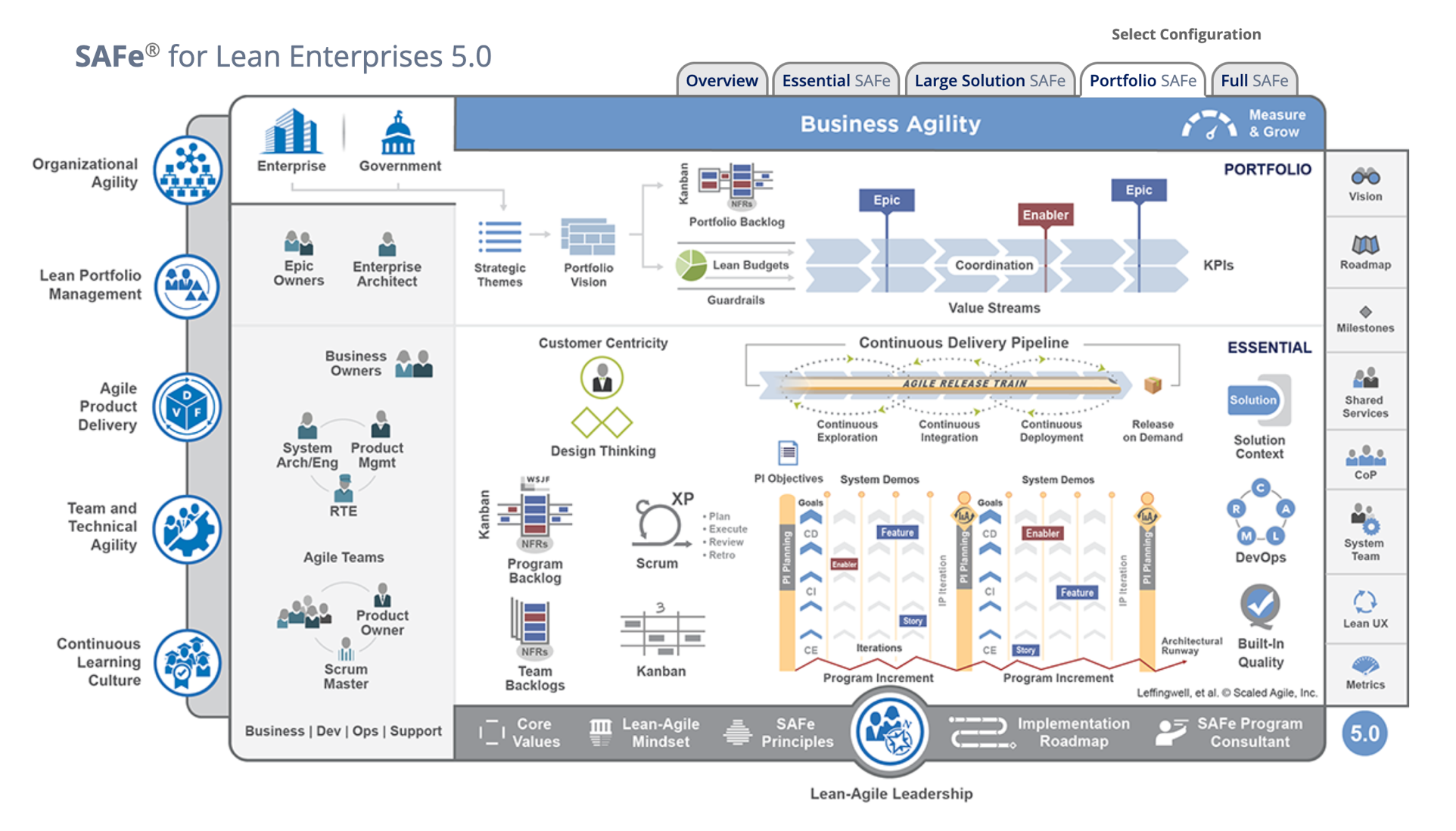
Moving Design Upstream in SAFe
PROBLEM
Designers at USAA were stuck doing production work at the end of the product development life cycle – superficial, low value-added design tasks.
SOLUTION
Built out design teams with 1 director, 1 producer, and 4 or more designers, giving the overall design team sufficient bandwidth to not only handle execution tasks, but also elevate themselves into higher level discussions about what problem we’re trying to solve and how to solve them
Engaged with product and engineering teams at all three levels of the Portfolio SAFe model – Portfolio, Program, and Team
Leveraged human centered design techniques such as empathy maps, design research, journey maps, and experience based road maps to reframe problems, focus on user needs, and deliver more value to the business
IMPACT
Completely re-envisioned the bill pay user experience, providing a healthy product backlog for years to come
Created new feature concepts for the end-to-end real estate user journey and an experience based road map
Created a credit card journey map that redefined how business partners viewed their epic and feature backlog
Closed compliance gaps for deposit accounts
Redefined the quote process for life insurance applications, improving funnel throughput
Created new feature concepts for the health insurance user journey and an experience based road map which has added to and reprioritized the entire product backlog
Designed and implemented a new storefront experience for investing customers to migrate over to a new partner’s platform
Prioritization Framework
PROBLEM
Demand for design services within the Life Company portfolio vastly exceeded the supply of design resources
SOLUTION
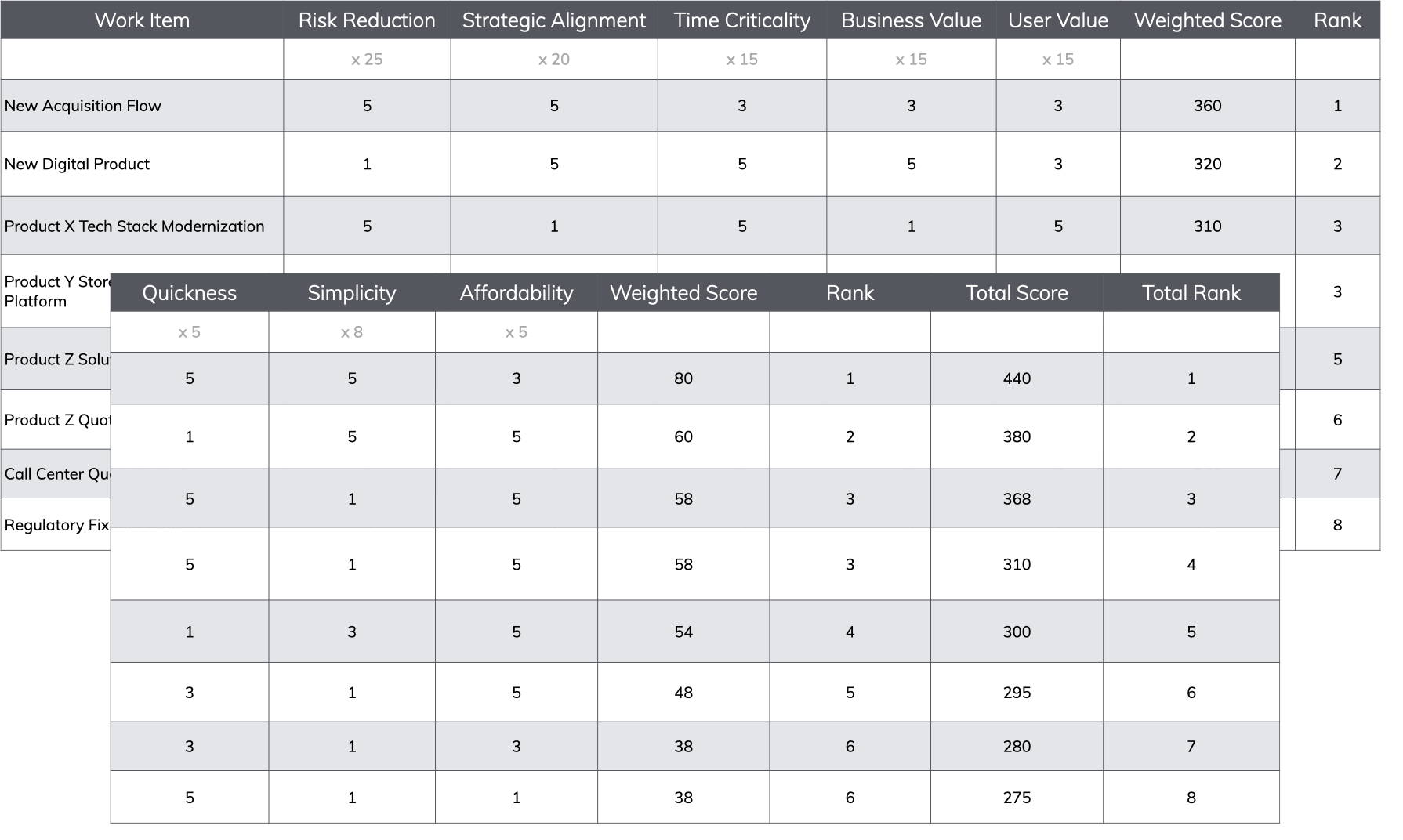
Established a prioritization matrix based on 8 criteria to score and rank each design support request in terms of impact and feasibility
Impact criteria: 1) Risk Reduction, 2) Strategic Alignment, 3) Time Criticality, 4) Business Value, and 5) User Value
Feasibility criteria: 6) Quickness, 7) Simplicity, and 8) Affordability
Leveraging story pointing and WIP Limits to keep designers from being spread too thin, mitigating the risk of burnout
IMPACT
All Life Co design resources are aligned to the highest business priorities
Design resources are never wasting their time on initiatives that are not a priority for the business
All partners and stakeholders have a clear understanding of what initiatives the design resources are working on
Design teams always know what’s next and where to focus their efforts if one initiative gets paused or slows down
Mitigation/reduction of business churn and design team burnout
New Digital Product Launch
PROBLEM
Life Co business was facing serious disruption because of insure-tech startups; needed to have an answer to a gap in their product portfolio.
SOLUTION
Directed design team to craft an “art of the possible” vision for a new, all digital life insurance product
The vision or “hero flow” was presented to the business leadership and catalyzed a commitment of business, marketing, actuary, and technology resources to build an all digital product
IMPACT
Significant business resources have been dedicated to launch the new product, the first new product to be launched in over a decade
The MVP launched in fall of 2021; follow up releases are planned for 2022
The Life Co business now has a product that can appeal to a younger target market, and they have begun to close a significant gap in their product portfolio
Diversity, Equity, & Inclusion Initiative
PROBLEM
USAA designated Diversity, Equity, & Inclusion (DEI) as a strategic imperative, but Life Co and Workforce experience design teams struggled to find time and bandwidth to dedicate to the effort.
SOLUTION
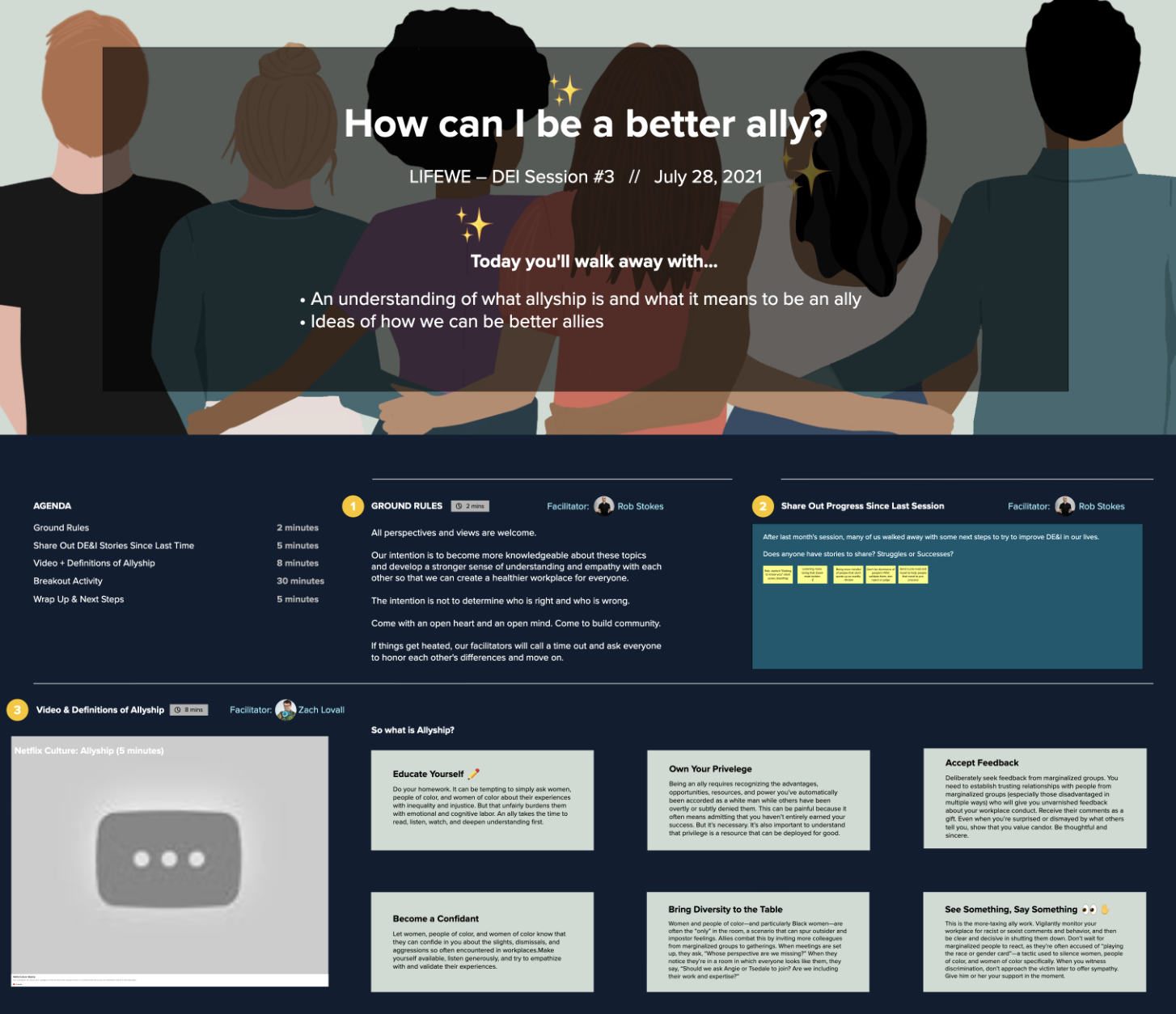
Created and led a small team to conduct 6 DEI working sessions on a monthly basis
Topics covered included: What do Diversity, Equity, and Inclusion Mean; How can I be a better Ally; What policies don’t support DEI and what can we do about them
IMPACT
Improved design teams’ awareness and education levels on DEI topics
Created a space for team members to articulate their point of view and feel more comfortable speaking up assertively in all their meetings at USAA
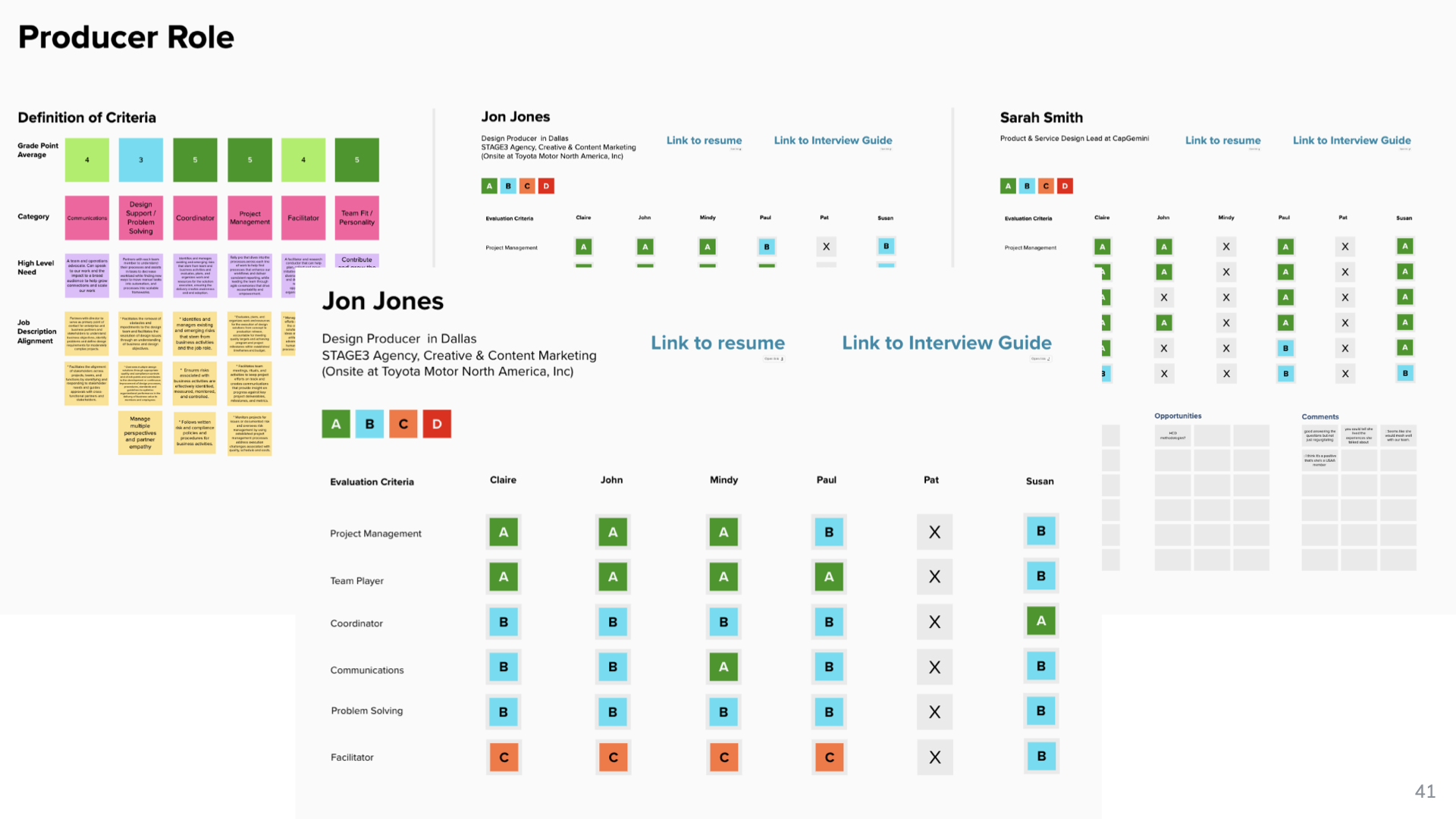
Hiring Scorecard
PROBLEM
Hiring managers were inconsistent in their hiring evaluation criteria and would at times not make the best hiring decisions, creating uneven levels of performance and team health.
SOLUTION
Distilled the contents of job descriptions and identified a reduced set of hiring criteria for each role
Developed a template of questions to ask regarding each of the criteria
Created a hiring scorecard with a “heat map” to evaluate candidates more objectively and evenly
IMPACT
Increased the speed of the hiring process across the design organization
Improved the rigor and quality of the candidate evaluation process
Gave hiring managers and their teams a more transparent, objective way to discuss candidates and make consensus-based decisions
In turn, the consensus-based hiring decisions reduced the amount of friction/resistance to the onboarding of new team members