frog is where I cut my teeth as a designer
It was there that I learned how to conduct design research, facilitate design thinking workshops, create product concepts, and do detailed interaction design. During the 9 years I was there I worked with a myriad of clients including Standard & Poor's, KPMG, Disney, Flextronics, AT&T, Motorola, and LG.
Shipped Products
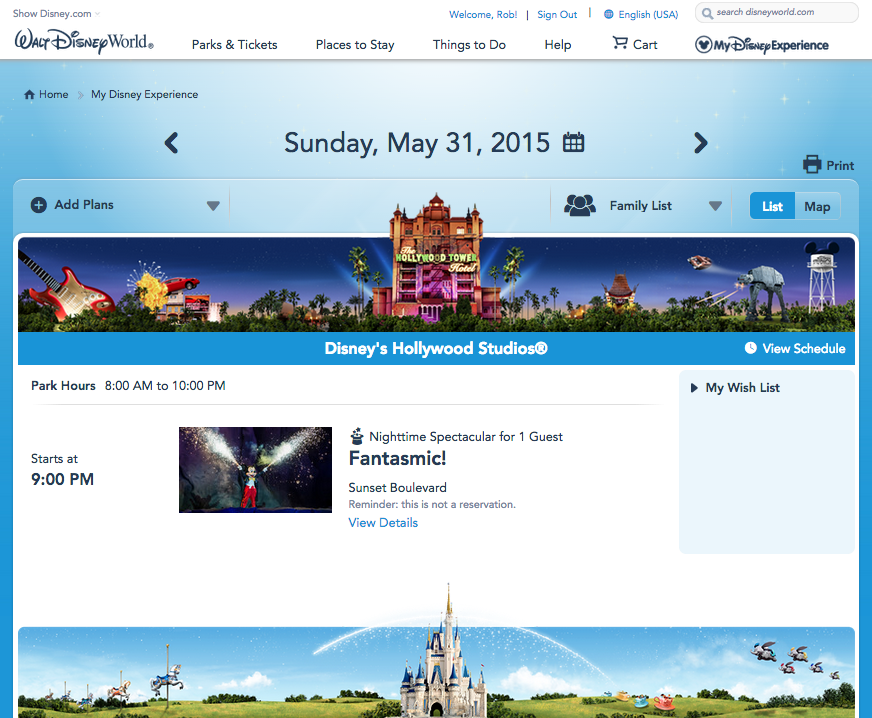
My Disney Experience
PROBLEM
Guests who visit DisneyWorld frequently are very intense itinerary planners. They want to maximize the value of their trips. Disney needed a digital vacation planning experience that was connected to their guests’ MagicBands, allowing them to fill up their own detailed itineraries with FastPass reservations, places they wanted to go, attractions they wanted to see, dining, and and resort accommodations.
SOLUTION
Generative research to identify guests’ mental model and pain points
Feature concept creation and user validation
Detailed interaction and visual design
Design support during product development
IMPACT
Created a seamless, end-to-end physical and digital guest experience that tied together all guest activities – from airport arrivals and departures, transportation, lodging, dining, rides, and attractions
Enabled Disney to match their legendary live customer service with best-in-class digital vacation planning tools that allow their guests to leave their spreadsheets at home and focus more on being in the moment during their vacation experience
Launched in 2012
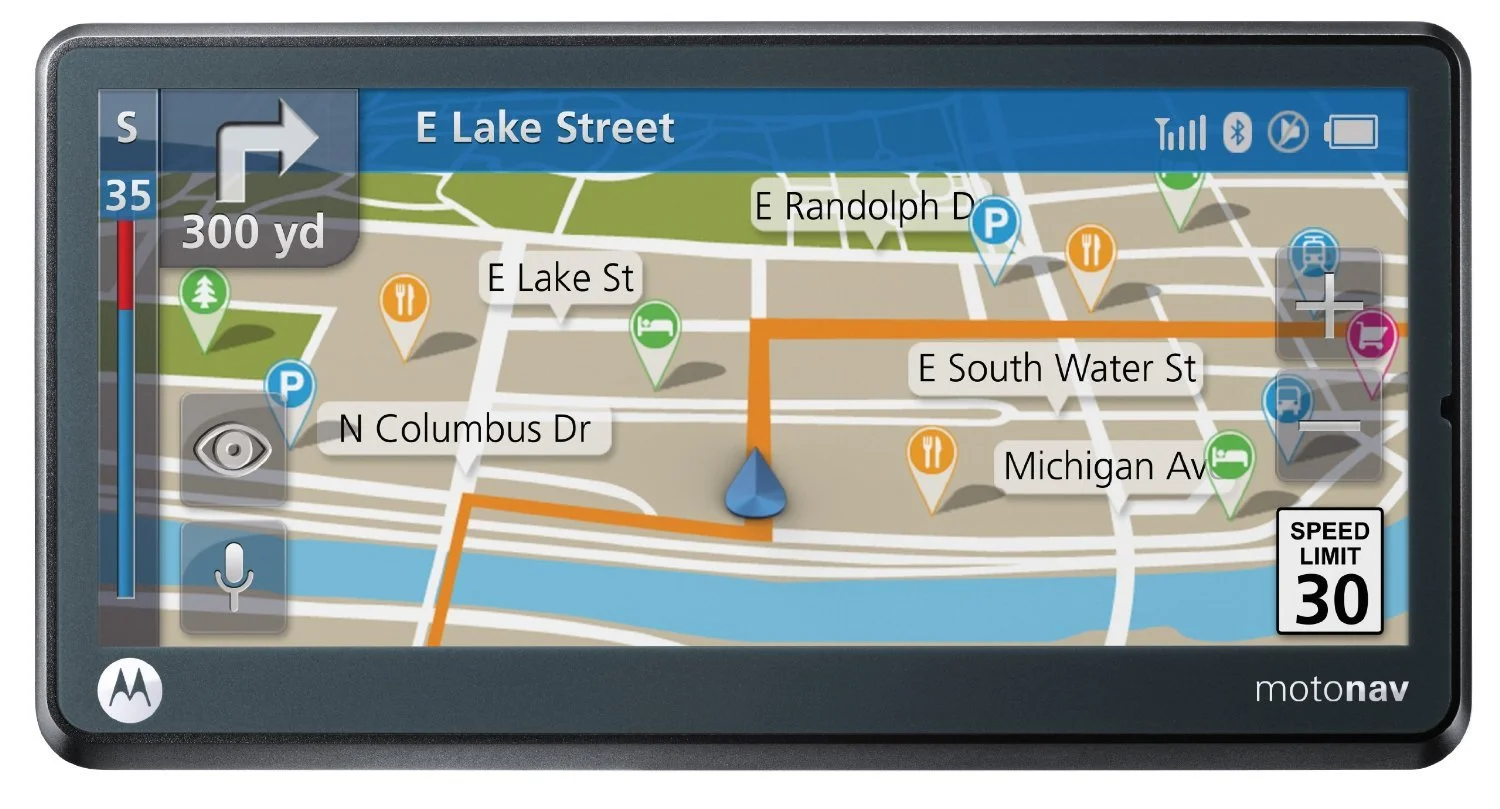
Motorola Motonav
PROBLEM
Motorola’s in-car navigation product experience was a boiler-plate user experience that came directly from the third party software developer that Motorola was using to deliver the map experience. It was not based on customer needs or insights; it was mostly an engineering-led product.
SOLUTION
Led design research to identify customer pain points and needs
Came up with feature ideas such as “along the route” gas stations, restaurants, and points of interest (before Google Maps rolled out that feature)
Created interaction design specifications
IMPACT
Gave Motorola a differentiated navigation product experience
Launched the product in 2010
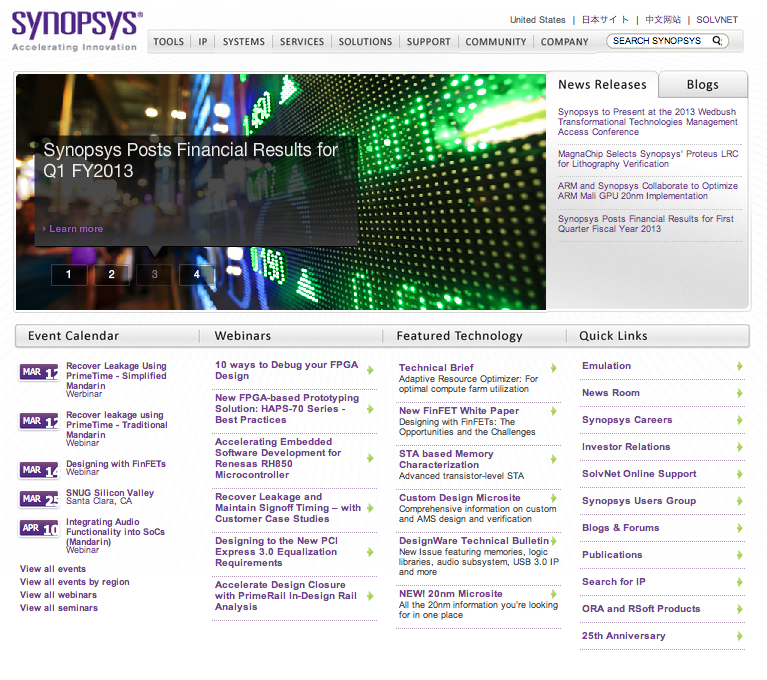
Synopsys.com
PROBLEM
The Synopsys.com website was essentially the company’s org chart manifested on the web; it did not use the terminology of its customers and it was not oriented around what their customers needed.
SOLUTION
Heuristic evaluation to identify standard usability problems
Contextual inquiries to identify customer mental models and pain points
Complete information architecture, interaction, and visual design makeover for Synopsys.com
IMPACT
Launched new company website in 2008 that mapped directly to customer mental models and gave the organization a more modern look and feel
Work Samples
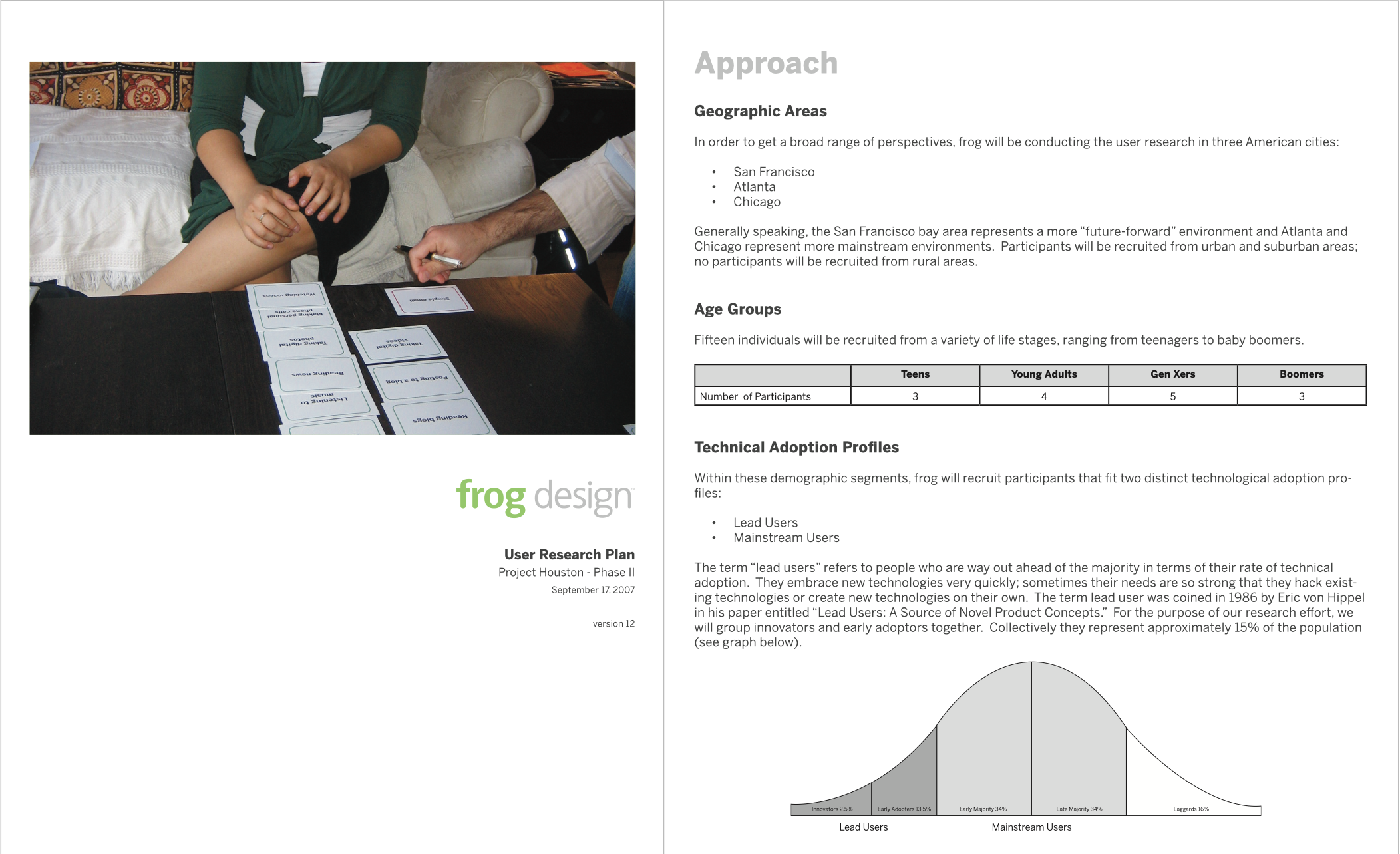
Design Research Plan
PROBLEM
Telecommunications client was searching for means to increase demand for their data services beyond demand for SMS messaging.
SOLUTION
Created qualitative research plan to uncover usage patterns, pain points, and unmet needs
Moderated 15 contextual inquiry sessions which included mind mapping, card sorting, and observation activities
Synthesized research findings into an insights framework
IMPACT
Provided design principles, opportunity areas, and high level concepts for the subsequent design phase
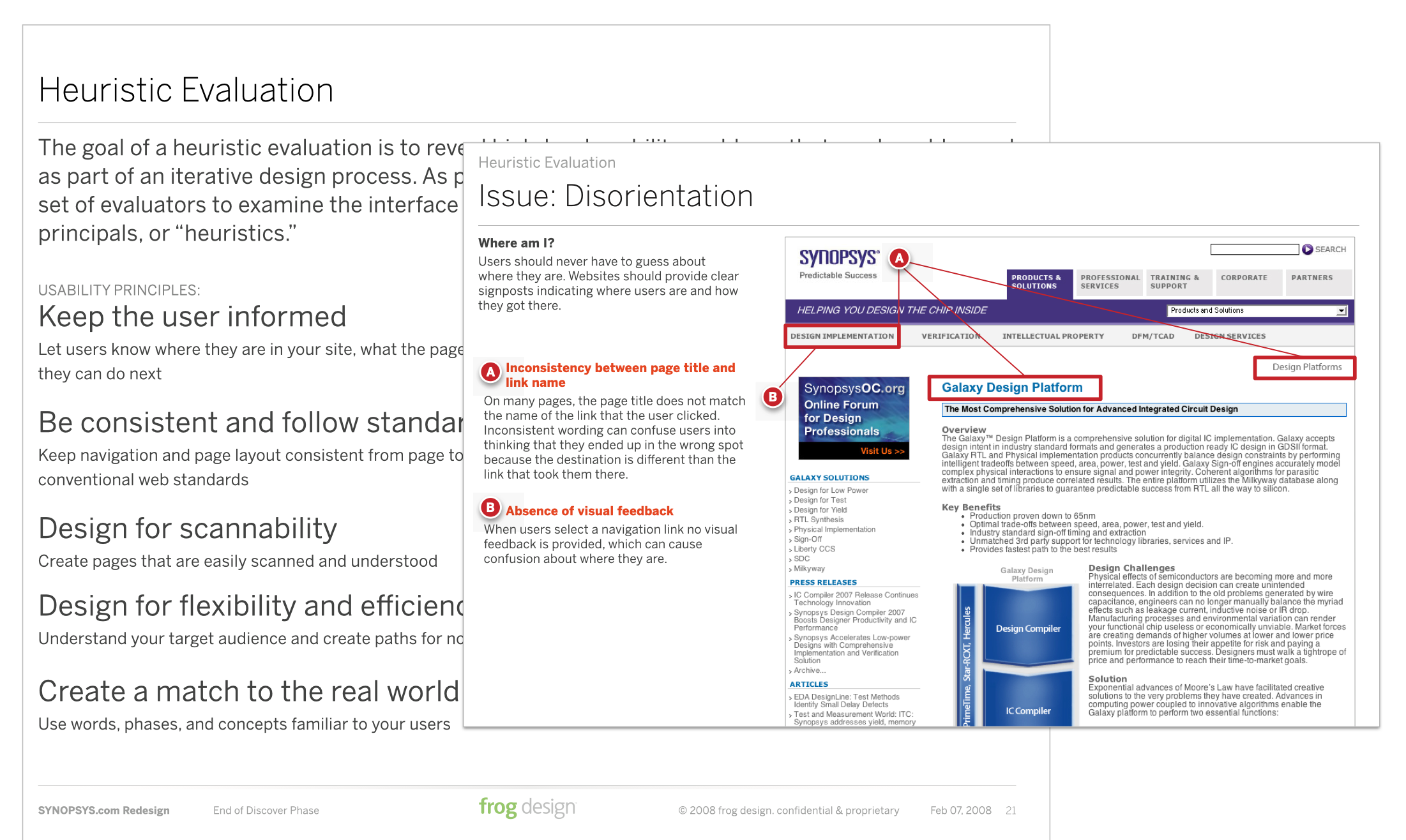
Heuristic Evaluation
PROBLEM
Synopsys (tech firm that creates design and test tools for silicon chip manufacturers) had an outdated website that had grown organically over many years. The website user experience was confusing and sub-optimal.
SOLUTION
Conducted a heuristic evaluation of the entire website to identify low hanging fruit problems that could be resolved to improve the user experience
IMPACT
Fixed fundamental usability problems with the company website, reducing customer confusion and creating an improved acquisition funnel experience
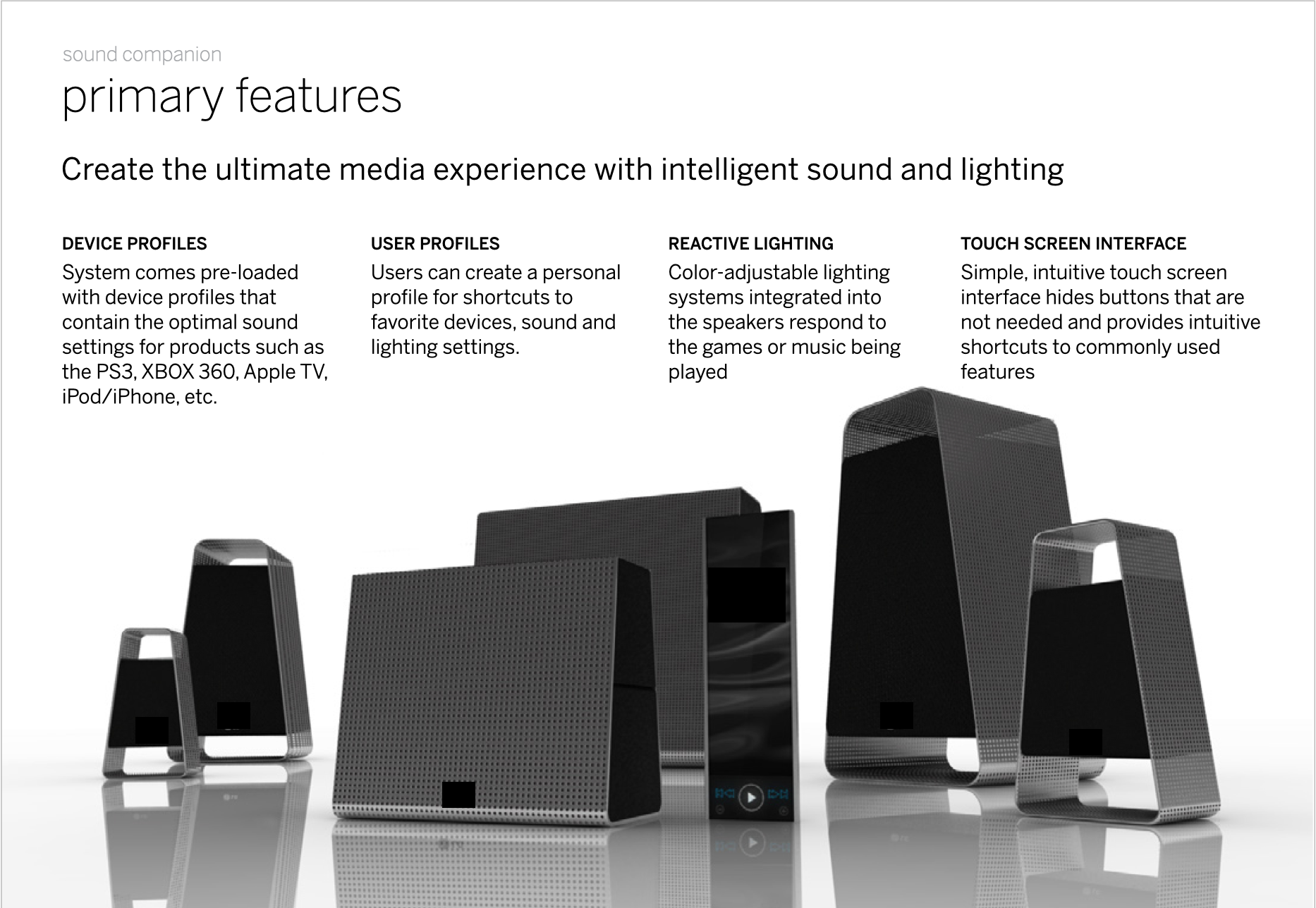
Design Concept
PROBLEM
Major consumer electronics manufacturer was looking for new product concepts to revive declining sales in home theater products.
SOLUTION
After extensive qualitative design research and synthesis, collaborated with other digital and industrial designers to construct a high fidelity product concept that included physical and digital products and services
Created detailed wireframes that were converted to high fidelity visual comps
IMPACT
Provided client with provocative new feature and product concept ideas that were submitted to their leadership for investment consideration
Although the product concept was never shipped as originally designed, several of the feature concepts (such as reactive lighting systems) were later rolled out successfully by a competing manufacturer
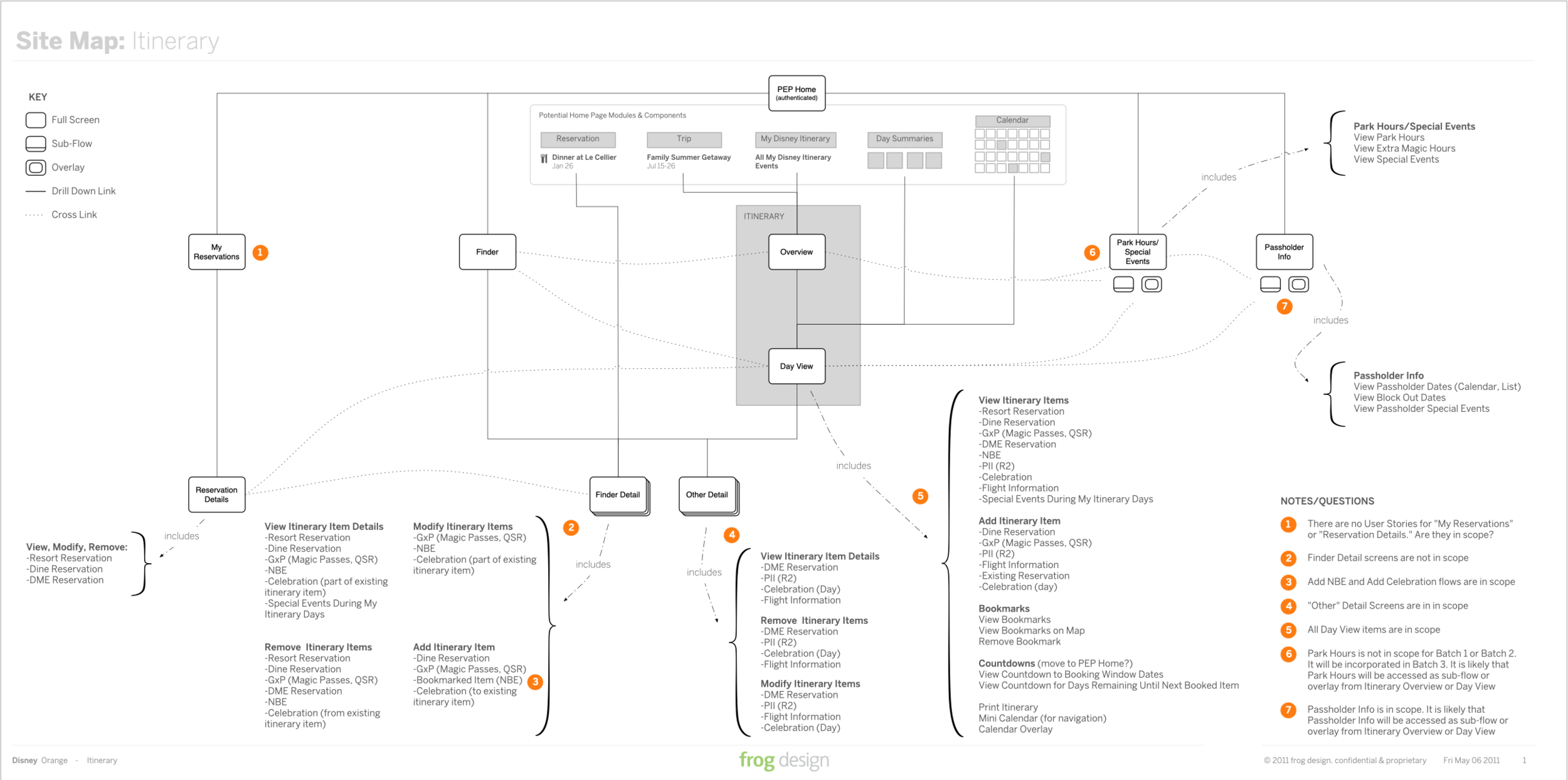
Information Architecture
PROBLEM
Client’s digital interactive ecosystem had a very broad scope, covering a wide range of functionality. The relationship and navigation between the different areas of the experience needed to be documented for product managers and developers.
SOLUTION
Created a site map that explained what the different areas of the experience were, how to navigate between them, and what features customers could access from the various locations in the experience
IMPACT
Site maps allowed product managers to validate the design system’s organizational construct, shape, navigability, and feature completeness
Site maps (and other design artifacts) allowed developers to create a coded solution that matched the design intent
Process Flows
PROBLEM
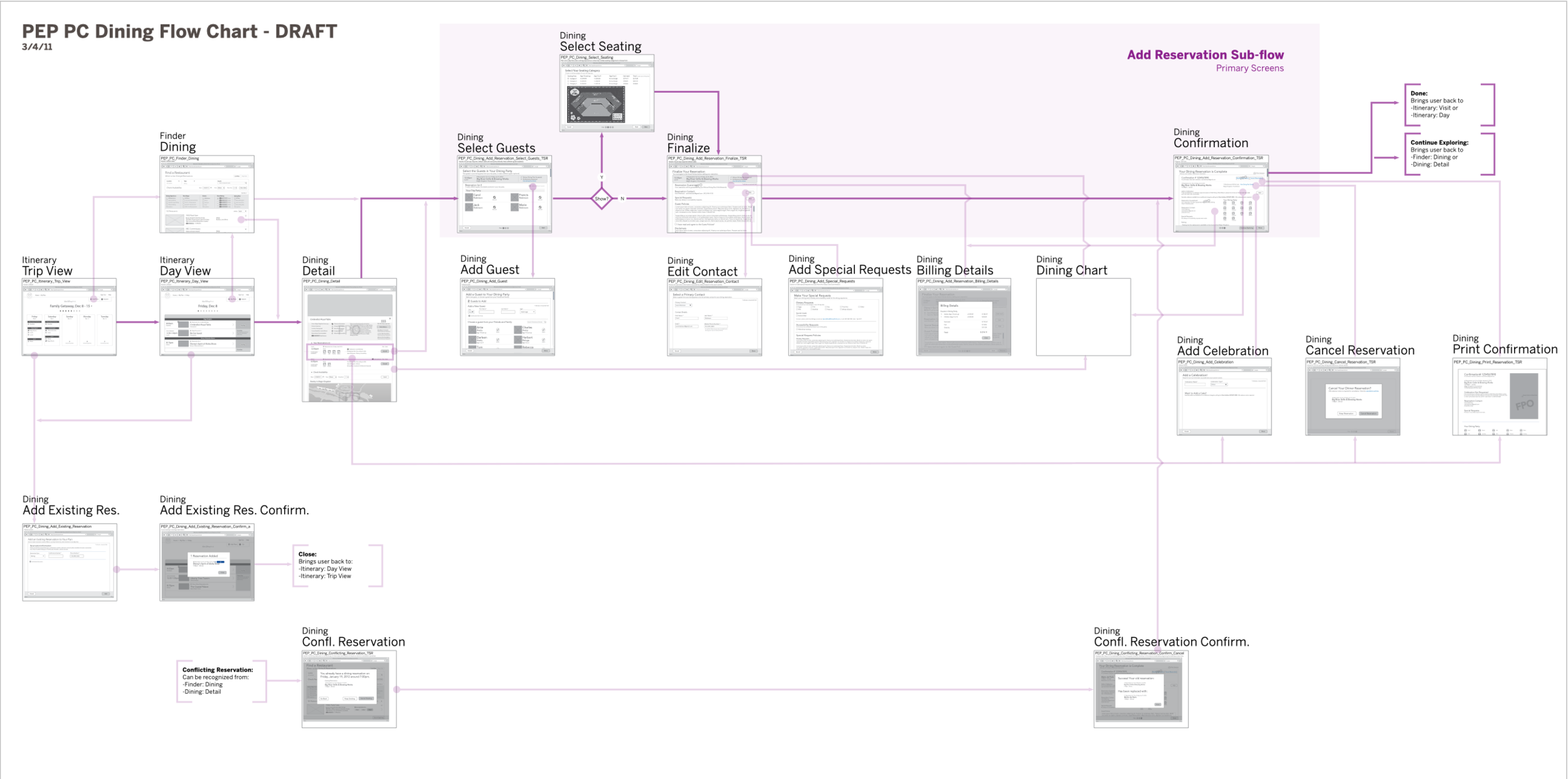
Client’s digital interactive ecosystem offered powerful features to allow customers to accomplish detailed vacation planning tasks. Explaining to product managers and developers how the design system allowed customers to accomplish these complicated transactions required very detailed system documentation.
SOLUTION
Created process flows with wireframe “thumbnails” to explain how a user could navigate through the experience and access all the required content and functionality
IMPACT
Process flows allowed product managers to validate the design system’s organizational construct, shape, navigability, and feature completeness
Site maps (and other design artifacts) allowed developers to create a coded solution that matched the design intent
Interaction Specification
PROBLEM
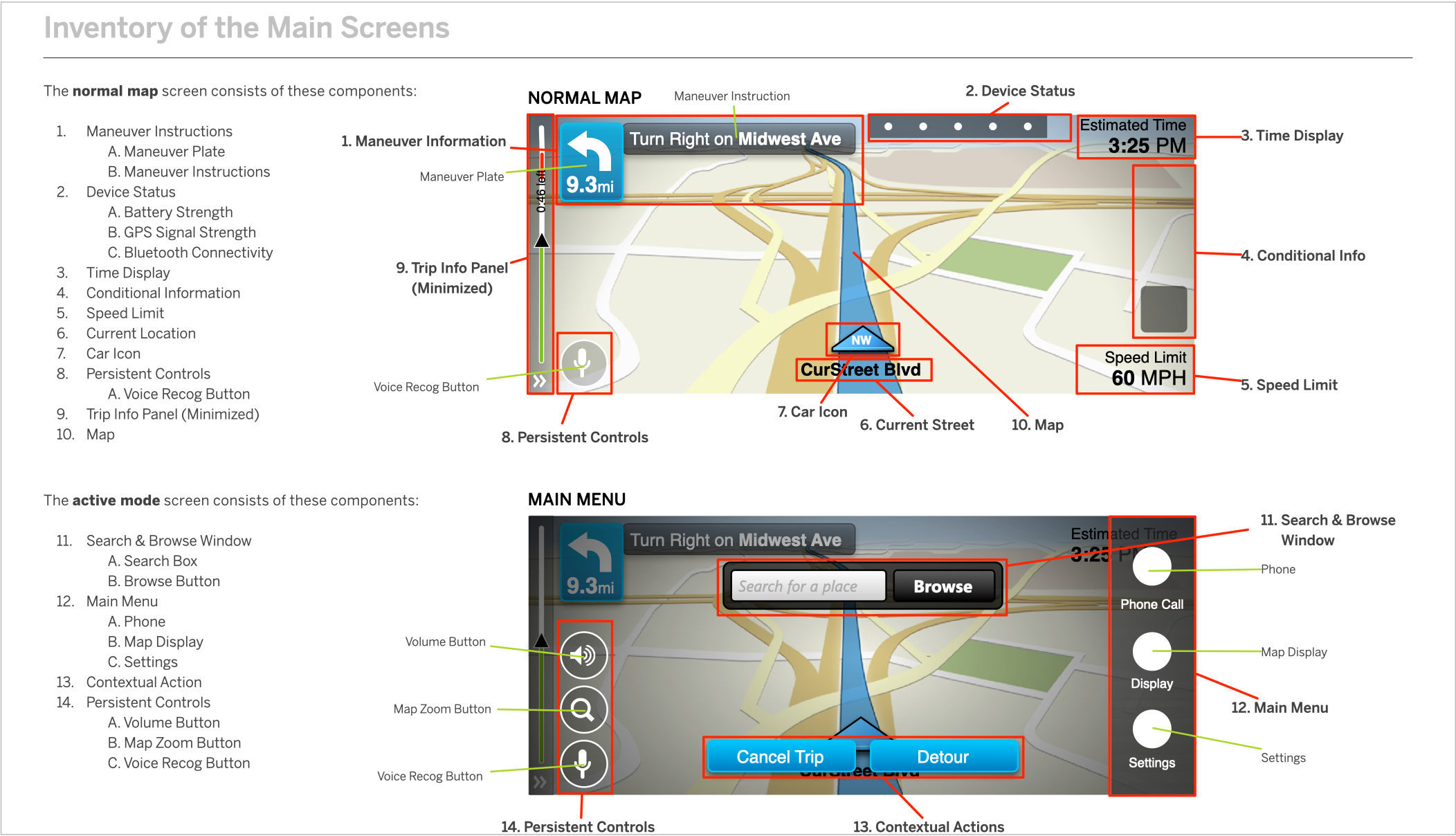
Client needed detailed user experience specifications to hand off to a third party development team.
SOLUTION
Created a detailed interaction specification document that covered all of the elements of the designed system and how each of the elements behaved and related to each other
IMPACT
Interaction specifications allowed product managers to validate the design system’s organizational construct, shape, navigability, and feature completeness
Interaction specifications (and other design artifacts) allowed developers to create a coded solution that matched the design intent